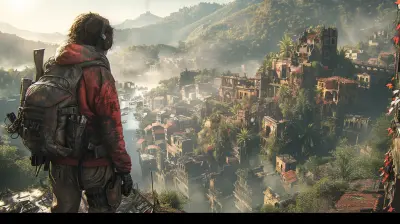
The Philosophy Behind Bioshock Infinite’s Interdimensional Politics
23 February 2026
Bioshock Infinite isn’t just a game. Yeah, on the surface, you’re running around with a sky-hook, blasting your way through floating cityscapes, but underneath all that action lies a complex web of ideology, identity, and... alternate realities? That’s right. Bioshock Infinite tackles some deep philosophical themes—particularly through the lens of interdimensional politics.
Let’s peel back the layers of Columbia, time loops, and tears in reality to uncover what this game really has to say about the world we live in.
Welcome to Columbia: A City in the Sky, Built on Ideology
Before we dive into the multiverse stuff, we’ve got to talk about Columbia—the floating city where the game takes place. Columbia isn’t just a technical marvel; it’s a utopia gone rogue. It’s patriotism cranked up to eleven. It’s like if someone took the American Dream, filtered it through religious extremism, then launched it into the clouds with a massive ego.Columbia is meant to represent an idealized America—but one that’s taken a dark turn. It’s filled with nationalistic fervor, racial segregation, and a blind worship of the founding fathers. If you listen closely, you’ll notice that every corner whispers a political message. From the murals to the propaganda broadcasts, it’s all a reflection of a society clinging tightly to its version of truth.
And that’s where things really start to unravel.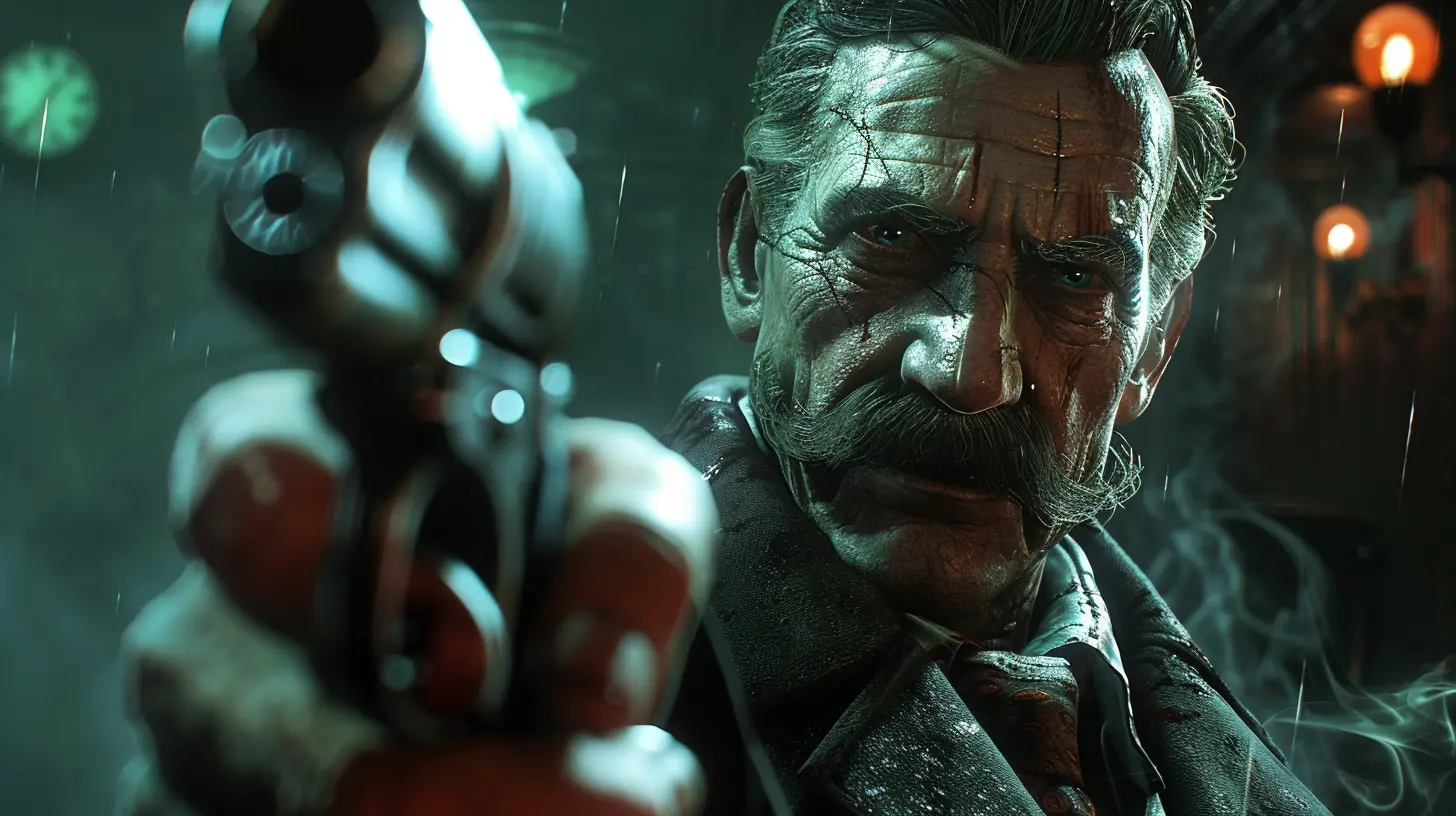
Dimensional Tears: Introducing Infinite Possibilities
One of the core mechanics of Bioshock Infinite is the concept of “tears” in the fabric of reality. These rips in space-time, often opened by Elizabeth, reveal alternate versions of the world.Here’s where it gets philosophical: what does it mean when multiple realities exist where different political outcomes occurred? In one, the Founders control Columbia with an iron fist. In another, the Vox Populi rise in rebellion, creating a revolutionary government. Both systems are flawed. Both lead to violence.
That’s intentional.
The game isn’t presenting a simple good vs. evil. Instead, it’s asking the player to consider the consequences of ideology unmoored from morality. What happens when political systems are driven purely by power, revenge, or blind belief?
The answer? Endless cycles of destruction. It’s like a broken record skipping between dimensions.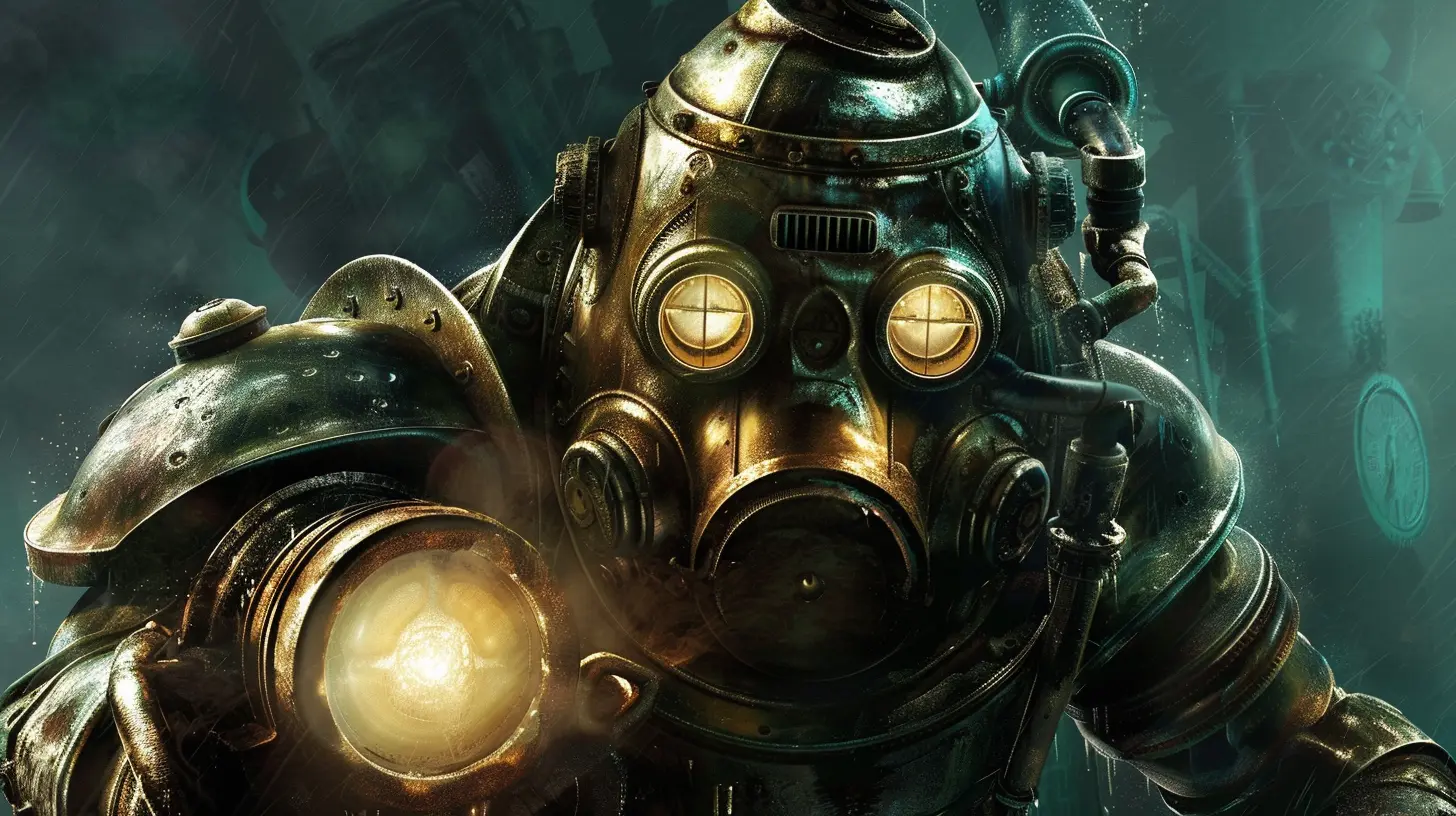
The Multiverse Theory: No Real Choices?
Now let’s take a detour into the mind-bending world of quantum mechanics and determinism. One of the game’s boldest philosophical statements comes from the idea that all possible choices actually happen—just in different timelines.Remember that scene where Booker flips a coin and it always lands the same way? That’s not just a quirky moment. That’s the game screaming at you: “Hey! Free will might be an illusion!”
In the multiverse of Bioshock Infinite, every version of Booker ends up either becoming Comstock—the main villain—or fighting to stop him. It’s a cycle. A loop. The constants and variables are always there, reshaping history in slightly different ways but never truly escaping fate.
So what does that say about politics?
It says that even when people try to build new systems—utopias, revolutions, reforms—they’re often trapped by the same underlying human flaws. Greed, pride, fear, and the hunger for control. Different banners, same mess.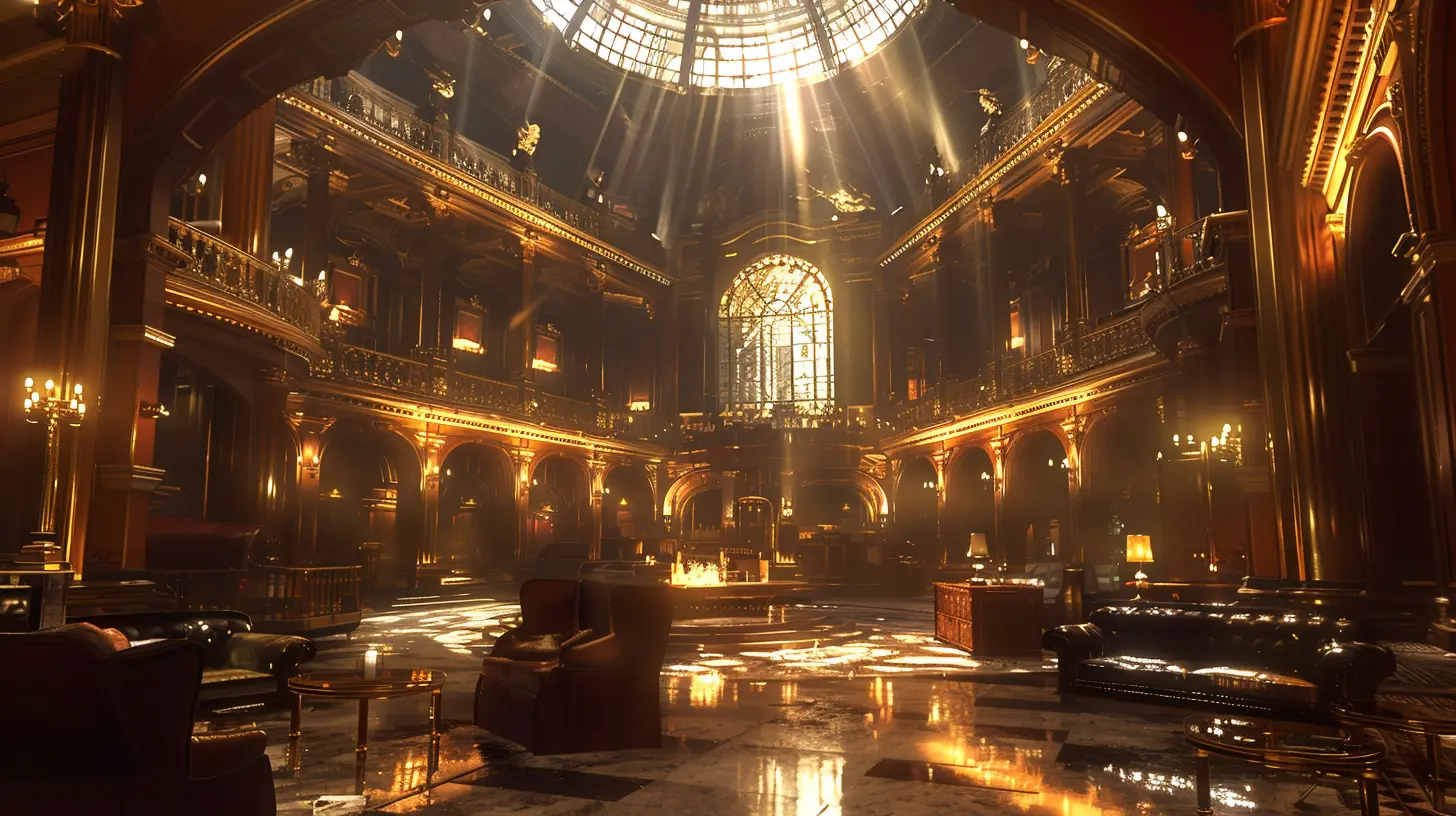
Comstock and Booker: One Man, Two Paths
Let’s talk characters—specifically Booker DeWitt and Zachary Comstock. They’re technically the same person, diverging due to a choice (or lack thereof) in an alternate reality. One chose to be baptized, becoming Comstock. The other refused, remaining Booker.This duality is key to understanding the game’s philosophical stance.
Comstock becomes a prophet, revered for his divine visions and political control over Columbia. But he’s also a tyrant. His vision of utopia is fundamentally broken—rooted in racial purity, religious zealotry, and authoritarian control.
Booker, on the other hand, is deeply flawed. He’s a gambler, a drinker, a man haunted by his past. But he’s also capable of change, of empathy, and ultimately, of sacrifice.
Their political ideologies mirror their paths. Comstock’s world is rigid, black-and-white, while Booker’s reality is messy, morally gray, and full of regret.
It’s almost like the game is whispering: “Beware of certainty. Beware of leaders who claim to have all the answers.”
Vox Populi: Revolution or Repetition?
Now, let’s not get too cozy siding with the Vox Populi either. At first, they seem like the underdogs—the oppressed rising up against the elite. But as the story unfolds, we see a darker side. They’re not fighting for justice; they’re often fighting for revenge.Daisy Fitzroy, their leader, becomes a mirror image of Comstock. Different team, same tactics. Violence, propaganda, and manipulation rule the day.
It’s a painful reminder that revolutions don’t always lead to freedom. Sometimes, they lead to new hierarchies, new oppressors, and even more chaos.
Pretty bleak, right?
That’s kind of the point. Bioshock Infinite is challenging our assumptions about political change. It’s asking: Can we ever break the cycle? Or are we just spinning the same wheel with different spokes?
The Luteces: Living Outside the Box
If the game’s main cast is caught in a loop, the Luteces are the observers. Think of them like quantum ghosts who bounce between realities, poking and prodding events without getting too attached.Their existence is a nod to the philosophical idea of the “observer effect.” They understand the mechanics of the multiverse, but they also understand how limited they are in influencing outcomes.
It’s like watching someone stuck in a maze. You see the exits, but they just keep turning in circles.
The Luteces add another layer to the game’s political commentary. They show the futility of trying to "fix" a broken system if the system itself is designed to repeat its failures. Without real change—without breaking the cycle—you’re just window dressing on a house that’s on fire.
Elizabeth’s Role: Power, Knowledge, and Choice
And then... there’s Elizabeth.She’s not just the heart of the game, she’s also the key to breaking the cycle. With her ability to open dimensional tears, she represents knowledge. Infinite knowledge, actually.
But knowledge without understanding can be dangerous.
One of the game’s major turning points is when Elizabeth becomes aware of all her possible selves. She sees every version of Columbia, every possible outcome. That level of awareness is both liberating and paralyzing.
She realizes the only way to stop Comstock is to prevent him from ever existing. That means going back to the moment of divergence and making the ultimate sacrifice.
It’s heavy. It’s tragic. But it speaks volumes about the costs of meaningful political change. Sometimes, to move forward, we have to destroy the foundation. Not just rearrange the furniture.
So, What’s the Game Really Saying?
At its core, Bioshock Infinite isn’t giving us answers. It’s not saying “this ideology is right” or “that revolution is noble.” Instead, it's putting a giant philosophical mirror in front of us and saying: “Look. Think. Question.”It challenges us to consider:
- Is history doomed to repeat itself?
- Can true political change happen, or are we always stuck in cycles?
- What happens when ideology overshadows humanity?
It’s more than just parallel universes and floating cities. It’s about choices. About morality. About recognizing that sometimes, both sides of the coin are tarnished.
Why This Matters Today
You might be thinking, “Okay, cool game philosophy and all—but how does this connect to the real world?”Well, just look around.
We live in a time of extreme ideological divides. People cling to identities, political parties, and belief systems like life rafts. They build echo chambers instead of bridges. And just like in Columbia, that kind of polarization leads to unrest, resentment, and sometimes violence.
Bioshock Infinite serves as a warning. A strangely beautiful, twisted, and unforgettable warning. It tells us that our systems—political, social, and ideological—are only as good as the people who build and maintain them. That blind faith, whether in leaders or causes, leads us down dangerous paths.
And maybe most importantly, it reminds us that change is hard. Painful even. But real change—the kind that breaks cycles—requires sacrifice, reflection, and the courage to see past our own biases.
Final Thoughts
Bioshock Infinite wraps its philosophy in gunfights, flying cities, and time loops—but beneath all that is a raw, unflinching examination of power, identity, and the politics that shape our lives. Through interdimensional chaos and deeply flawed characters, it makes a powerful point: that without self-awareness, history will always find a way to repeat itself.So next time you load into Columbia, take a second to really absorb what the game is trying to say. After all, there’s more than one way to change the world… but not all of them lead somewhere better.
all images in this post were generated using AI tools
Category:
Lore And StorylinesAuthor:

Stephanie Abbott
Discussion
rate this article
2 comments
Otis Snyder
What a fantastic exploration of "Bioshock Infinite" and its complex themes! Your insights into the game's interdimensional politics really illuminate how deeply thought-provoking it is. Can't wait to dive deeper into these philosophical layers. Thank you for sharing your perspective!
February 24, 2026 at 4:32 PM
Stephanie Abbott
Thank you for your kind words! I'm glad you found the exploration insightful. Enjoy diving into those philosophical layers!
Mika McGrath
Bioshock Infinite expertly explores identity through alternate realities.
February 24, 2026 at 4:41 AM
Stephanie Abbott
Thank you! "Bioshock Infinite" indeed uses alternate realities to delve into complex themes of identity, showcasing how choices shape our existence across different dimensions.