Why Storytelling Matters in Educational Games
20 May 2026
Let’s face it—education and fun don’t always go hand-in-hand. We’ve all yawned our way through bland textbooks or clicked through lifeless online learning modules. But what if we could inject a little magic into learning? That’s where educational games come in—and more specifically, storytelling in those games.
You might be thinking, “Games? Sure, they’re fun. But storytelling? In educational games?” Yep. And it’s not just a cute add-on. Storytelling is the backbone that can turn a regular learning experience into something that actually sticks.
In this article, we’ll break down why storytelling isn’t just important—it’s essential in educational games. Grab a snack and relax, because we’re about to dive into the whole narrative universe behind learning through stories.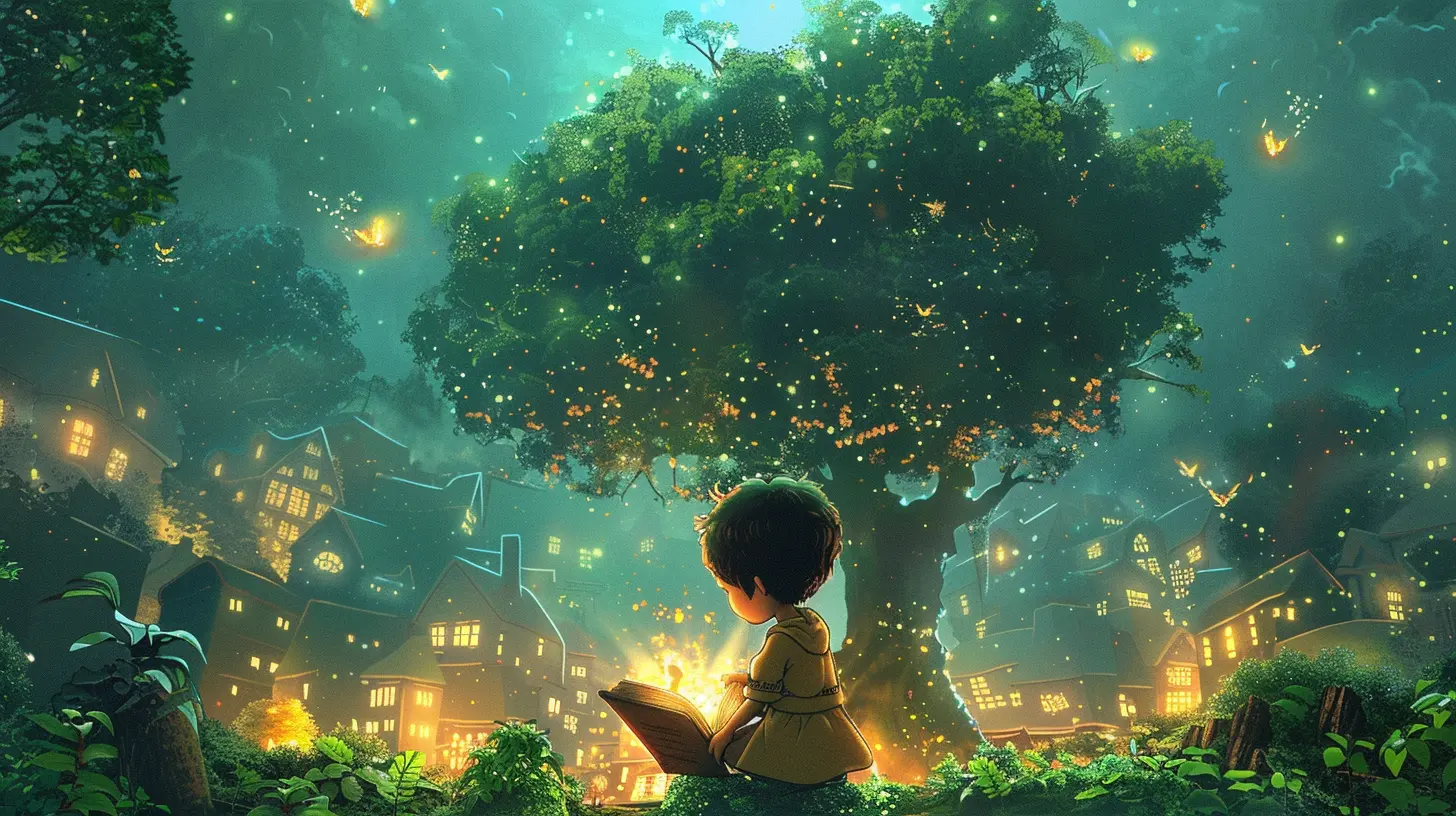
? The Power of Storytelling: More Than Just Fairy Tales
Remember the bedtime stories you heard as a kid? Or the gripping plotlines in your favorite games? Stories are wired into our brains. They’ve been used for centuries to teach cultures, pass down morals, and make sense of the world.In the world of educational games, storytelling acts like the magic thread weaving together content, engagement, and emotional connection. Without a narrative, even the most well-designed game can feel dry or disconnected. But with a compelling story? That’s when the magic happens.
✨ Engagement Level: Maxed Out
Let’s be real—attention spans these days are like goldfish… or maybe even shorter. But throw in a captivating story, and suddenly, players are hooked.Why storytelling boosts engagement:
- Creates curiosity: Players want to find out what happens next.- Builds emotional investment: When you care about a character, you stick around.
- Stimulates imagination: A well-told story turns a learning task into an adventure.
Instead of just solving math problems, imagine helping a quirky alien fix their spaceship by doing calculations. Way cooler, right?
? Memory Lane: Stories Stick Better
Here’s some brainy science without the boring bits—our brains are wired to remember stories better than raw data. When information is wrapped in a narrative, we retain it longer and understand it deeper.Think about it:
Would you rather remember a date from history or the story of a rebellious teen soldier who changed the course of a war? I know which one I’d pick.This concept is golden for educational games. When students learn through narrative-based challenges, those lessons don’t just go in one ear and out the other—they stick.
? Purpose-Driven Learning
Games without a story can feel like a bunch of disconnected puzzles. Sure, the mechanics might be fun, but what’s the point?Storytelling gives the gameplay a purpose. It explains:
- Why you’re solving those puzzles.
- How each challenge fits into the bigger picture.
- What’s at stake if you succeed or fail.
This context is everything. It gives meaning to the learning process and makes players care about their progress.
? Problem-Solving in Context
Imagine being dropped into a random math problem. Now imagine being a time-traveling archaeologist deciphering ancient codes to unlock secrets of the past. Same math skill, wildly different vibes.Narratives provide context that sparks critical thinking. When players are engaged in a story, they’re more likely to:
- Use logic to solve problems.
- Try multiple approaches.
- Think outside the box.
It’s not just about getting the right answer—it’s about learning the “why” behind it.
? Cultural and Emotional Exploration
Educational games with strong storytelling can do more than teach academic skills—they can also build empathy, cultural awareness, and global thinking.Here's how:
- Stories from different cultures teach diversity and inclusion.- Emotional story arcs help players understand feelings and relationships.
- Characters with personal struggles foster empathy and social skills.
In short? Storytelling humanizes learning. It adds dimension to flat facts and helps players connect with the world in a more meaningful way.
? Kid-Friendly Storytelling: Not Just Fluff
Let’s zoom in on the younger crowd. Kids are naturally drawn to stories. It’s how they make sense of new experiences. So when learning is wrapped in a narrative, it becomes second nature.In children’s educational games, stories:
- Keep motivation high.- Break complex ideas into digestible bites.
- Use characters to model thinking and behavior.
You ever watch a kid light up when they realize they helped a character succeed? That’s not just cute—it’s powerful learning in action.
? Gamified Narratives = Personalized Learning
Everyone learns differently, right? Some of us are visual learners, some are hands-on, and others just want to read or listen.Good storytelling in games allows for adaptive learning paths. Players can:
- Make choices that affect the storyline.
- Learn at their own pace through branching storylines.
- Replay scenarios to see different outcomes.
This flexibility helps learners feel in control. It’s like being the author of your own educational journey.
? Motivation: From “Have to” to “Want to”
Ask any teacher: one of the biggest struggles is motivation.Story-infused games flip the script. Gamers don’t feel like they have to solve that science riddle. They want to because it helps their beloved character complete a mission or save the day.
Suddenly, learning isn’t a chore—it’s a quest.
? Real-World Examples of Story-Based Educational Games
Let’s give a shoutout to some legends who are doing this right:1. DragonBox
Math has never looked so epic. DragonBox delivers algebra through mysterious boxes, characters, and evolving storylines. Kids don’t even realize they’re doing real algebra!2. Zoombinis
These puzzle-packed adventures with little blue characters aren’t just fun—they’re a masterclass in logical thinking and pattern recognition, disguised as a whimsical journey.3. The Oregon Trail
Old-school, but iconic. This historical journey taught generations of kids about westward expansion—through choices, consequences, and storytelling that sticks.These games prove that when story meets learning, everyone wins.
? Better Assessment Through Narrative
Even assessments (yawn, I know) get a glow-up with storytelling. Instead of boring multiple-choice quizzes, games can assess understanding through in-game decisions and story outcomes.Think of it like this:
- Did the player choose the right strategy to solve the kingdom’s water crisis?
- Did they use reading comprehension to help a lost character find their way home?
These story-based assessments are way more accurate indicators of true understanding. And way more fun.
? Emotional Connection = Long-Term Impact
Stories make us feel something. Whether it's laughter, suspense, or even sadness, that emotional charge wires lessons directly into our long-term memory.In education, that means:
- Deeper cognitive connections.- Stronger emotional intelligence.
- Greater motivation to apply what was learned in real life.
If a student helps a character overcome a fear or stand up to a bully, they’re not just learning social-emotional skills—they’re living them.
? Takeaways: Why You Should Absolutely Care
Okay, let’s break it down one more time. Why is storytelling such a game-changer in educational games?- It keeps learners glued to the screen—for the right reasons.
- It turns dry lessons into emotional, memorable adventures.
- It teaches more than just facts—it builds real-world skills like empathy, critical thinking, and problem-solving.
- It personalizes the journey, making learning feel unique and meaningful.
So the next time you play (or create) an educational game, ask yourself: “Where’s the story?” Because if it’s missing, you’re leaving behind the most powerful tool in the learning toolbox.
? Final Thoughts
Learning doesn’t have to be boring. And games don’t have to be mindless fun. When you blend education with engaging narratives, you get the best of both worlds.So, whether you’re a developer, a teacher, a parent, or just someone who loves games (who doesn’t?), remember this: stories aren’t just how we pass time—they’re how we make sense of the world.
And in the realm of educational games, they’re the secret sauce that turns knowledge into wisdom, and playtime into something powerful and unforgettable.
all images in this post were generated using AI tools
Category:
Educational GamesAuthor:

Stephanie Abbott
Discussion
rate this article
2 comments
Eliana Sharpe
Storytelling in educational games enhances engagement by creating emotional connections. A compelling narrative can transform learning into an immersive experience, making complex concepts more relatable. When players invest in a story, they are more likely to retain information and develop critical thinking skills through interactive problem-solving.
July 18, 2026 at 4:29 PM
Betsy McIntosh
Because nothing says learning like a dragon-slaying math quest...
May 26, 2026 at 3:40 AM
Stephanie Abbott
Exactly! Engaging narratives make complex concepts memorable and fun. Kids are more likely to grasp math when it's tied to an epic adventure.