Top Benefits of Using Games in the Classroom
7 December 2025
Let’s face it — if you tell a room full of students they’re about to “play a game” instead of “take notes on the Cold War for 45 minutes,” you’re going to see more excitement than a cat spotting a laser pointer. Games in the classroom aren’t just a clever gimmick to keep kids quiet (although, let’s give some credit where it’s due — it works). They’re actually one of the sneakiest, most effective ways to help students absorb knowledge without feeling like they’ve been tricked into learning.
So buckle up, teacher friend (or parent, or curious lurker), because we’re diving headfirst into the glorious, often hilarious world of gamified learning. Spoiler alert: it’s not just fun and games. Okay, it kind of is. But with purpose.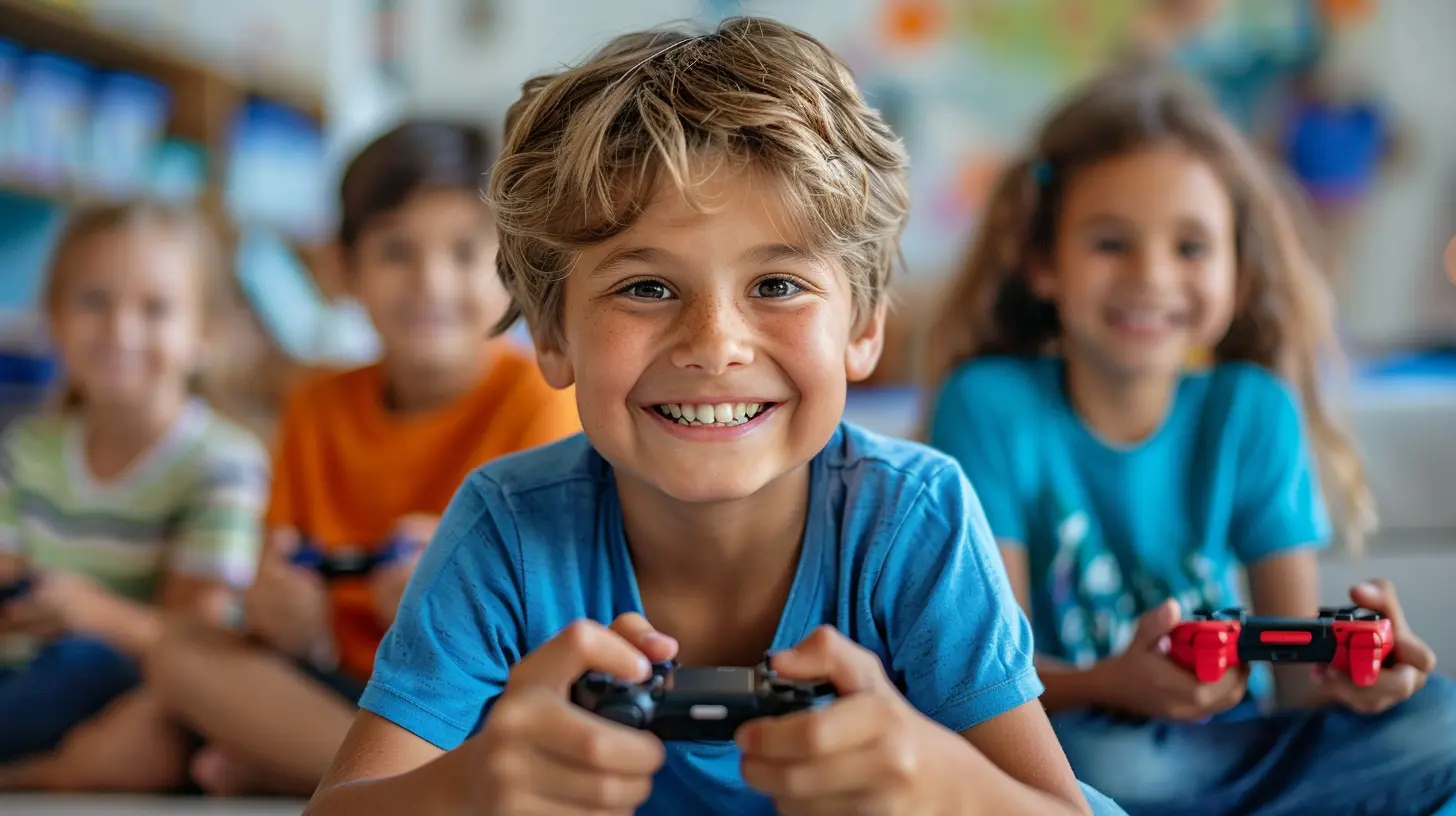
🎯 1. Engagement Levels: Over 9000!
Let’s talk about attention spans — or the lack thereof, shall we?In a world where TikTok videos are too long, expecting students to focus on a 40-slide PowerPoint about algebra is like asking a goldfish to run a marathon. Enter: games. Boom. Instant engagement.
Games activate the brain's reward system. That "just one more round" mentality isn't laziness — it’s brain chemistry. Add a few competitive elements, throw in a leaderboard, and suddenly even your most reluctant learner wants to beat their high score on synonyms.
Why It Works:
- Students feel in control (power trip, achieved).- There's instant feedback (unlike waiting a week for a graded paper).
- Everyone loves shiny badges and pretend coins (just ask Mario).

🧠 2. Learning Without Realizing... the Sneakiest Benefit
Games are the educational Trojan horse. They disguise learning as play. Kids (and honestly, adults too) are so busy solving murder mysteries with math problems or building historical cities in Minecraft that they forget they’re learning.Imagine if workouts felt like dance parties. Everyone would be ripped.
What’s Really Happening:
- Critical thinking is off the charts.- Collaboration and communication sneak in (especially when kids strategize together).
- Concepts are revisited repeatedly — hello, long-term memory!
We’re not saying your students will become Einstein overnight, but hey, they might just stop confusing their there’s and they’res.
📚 3. Supports All Kinds of Learners – Even the “I Hate School” Kind
Visual learners, auditory learners, kinesthetic learners — games don’t discriminate. In a traditional lecture, your student who zones out after 3 minutes? Toast. But in a game-based setup? They might be your MVP.Perks for Different Learning Styles:
- Visuals and motion for the YouTube generation.- Sound cues and narration for auditory learners.
- Interactive dragging, clicking, moving — real engagement for the hands-on crew.
Even the kid who's allergic to pencils might finally participate. It’s basically educational inclusivity without the boring posters.
💪 4. Builds Soft Skills (a.k.a. The Ones Nobody Tests but Everyone Needs)
Group-based games are like a crash course in life skills. You want your students to learn teamwork, communication, time management, sportsmanship, critical thinking, and the ability to not flip a table when they lose? Games have your back.Sure, Becky cried when she got eliminated in round one of “History Jeopardy,” but next time? She's bringing strategy and fire.
Game-Induced Life Lessons:
- Taking turns without a meltdown- Losing gracefully (keyword: gracefully)
- Disagreeing without battling like gladiators in the Colosseum
All that, and you didn’t even need a conflict resolution handout.
🧩 5. It’s Customizable AF
There’s a game for every age, subject, and mood. Want to teach ecosystems? There’s a game for that. Need to drill multiplication tables without putting half your class to sleep? Yup — game it.You can either use flashy, digital platforms that look like they were built by NASA — or you can grab a whiteboard and play “Hangman: Shakespeare Edition.” Flexibility is kind of the whole point.
Teachers, Rejoice:
- Use existing games or create your own in five minutes flat- Tie games into your curriculum (bonus points if nobody notices)
- Even assessments can be gamified — goodbye, boring quizzes!
🧨 6. Reduces Classroom Chaos (No, Seriously)
Okay, this one sounds counterintuitive. Games? Less chaos? Have you seen kids during a game of “Kahoot!”? It’s bedlam. Glorious, educational bedlam. But here’s the twist: it’s organized chaos that actually promotes focus and structure.Games create natural rules, systems, and expectations. Everyone knows their role. That student who usually throws spitballs? Now he’s focused on getting to “level 3” in your grammar game.
Secret Sauce:
- Built-in structure keeps things on track- Everyone’s occupied (read: less time for mischief)
- Motivated students = less side chatter and more “Let’s do this!”
Who knew the cure for chaos was more playful chaos?
📉 7. Failure is Fun (for Once)
In traditional schooling, failure = red pen sadness and self-esteem in a dumpster.In games? Failure means “try again,” “you’re getting close,” or “you unlocked the ‘Oops’ badge!”
Failing in a game triggers something magical — people want to try again. It takes the sting out of messing up and replaces it with curiosity and determination. Who wouldn't prefer leveling up over being labeled a “D” student?
Power-Ups of Failure:
- Encourages a growth mindset- Promotes persistence and resilience
- Builds confident learners who aren’t afraid to mess up
Traditional tests wish they had this level of optimism.
🧪 8. Real-Time Data Without a Spreadsheet Meltdown
Teachers, listen up. You can get assessment data without a single multiple-choice test or Scantron sheet. Game-based learning? It tells you who’s got the concept down cold and who still thinks 2+2=22.While students play, you’re collecting data like a super-sneaky academic spy. Except instead of gadgets, you’ve got interactive platforms feeding you real-time results.
What You Get:
- Instant feedback on what’s working (and what’s definitely not)- Insight into individual progress and group trends
- Less time grading, more time being the cool teacher with board games in your drawer
Basically, teaching just leveled up.
🤑 9. It’s (Mostly) Free
We all know the education system was apparently given a budget of five paperclips and a wish. But guess what? Tons of amazing educational games are free. Free. Your wallet can finally take a nap.From free online platforms (Kahoot, Prodigy, Blooket — we see you) to old-school DIY board games made with index cards — this isn't about flashy tech. It’s about creativity.
Budget-Friendly Bonuses:
- Low-cost/high-impact classroom activities- Reusable game materials that last all year
- Even students can make their own games for peer learning
Who needs gold when you’ve got laminated flashcards and dice?
🧠 10. It Makes Teachers Look Like Rockstars
Let’s be real for a second. When you introduce a killer game that has half the class shouting answers, helping each other, and excited to learn? You become a legend. Students talk about you. Admin notices. Suddenly, people think your class is where the magic happens.You could have a messy desk and a questionable coffee habit — doesn’t matter. You’re the teacher that makes learning feel like an epic quest.
And let’s not forget: The joy of seeing a student finally “get it” during a game? Better than winning the lottery. (Well… almost.)
Final Thoughts: Games Aren’t Just for Rainy Day Time Fillers
If you've stuck around this long, it probably means you're either a curious teacher, a skeptical admin, or a student hoping for reasons to convince your teacher that “Yes, we should play another round of Quizlet Live.”Here’s the deal: Games in the classroom make learning joyful, memorable, and meaningful. They don't replace the foundations of education — they supercharge them. Like putting a rocket booster on a bicycle.
So, go ahead. Bring out the cards, the buzzers, the laptops, or just your imagination. Teach that lesson through a game. And when your students start asking, “Can we learn this way every day?” — you’ll know you’ve done something right.
Let’s turn the classroom into the ultimate co-op campaign.
all images in this post were generated using AI tools
Category:
Educational GamesAuthor:

Stephanie Abbott
Discussion
rate this article
3 comments
Soren Luna
What an insightful read! Incorporating games in the classroom enhances engagement and learning, making education both fun and effective. Great job!
April 22, 2026 at 3:34 AM
Stephanie Abbott
Thank you! I'm glad you found it insightful. Games really do make learning more engaging.
Thornefield Roth
This article highlights the valuable role of games in education, promoting engagement and critical thinking. While it effectively outlines benefits, a brief discussion on potential challenges would provide a more balanced perspective on classroom integration.
December 15, 2025 at 3:55 AM
Stephanie Abbott
Thank you for your insightful feedback! I appreciate the suggestion to include potential challenges, and I'll consider that for future discussions to ensure a more balanced perspective.
Ranger McDaniel
Games in the classroom ignite creativity and collaboration, making learning fun and engaging! Embrace this innovative approach to inspire students and enhance their educational journey!
December 9, 2025 at 6:07 AM
Stephanie Abbott
Thank you for your insight! Games truly do foster creativity and collaboration, enriching the learning experience for students. Your enthusiasm for this innovative approach is appreciated!