The Tragic Fall of Andrew Ryan: BioShock’s Visionary Villain
16 February 2026
When you think of iconic video game antagonists, there's one name that always surfaces—Andrew Ryan. He isn’t your typical mustache-twirling villain. No, Ryan is layered, complex, and painfully human. In BioShock, his story isn't just about evil for the sake of evil—it's about ideals pushed too far, dreams turned to nightmares, and how ambition without balance can destroy everything.
So, let’s dive deep into the life, dreams, and inevitable demise of Andrew Ryan—the visionary who built Rapture and watched it crumble by his own hand.
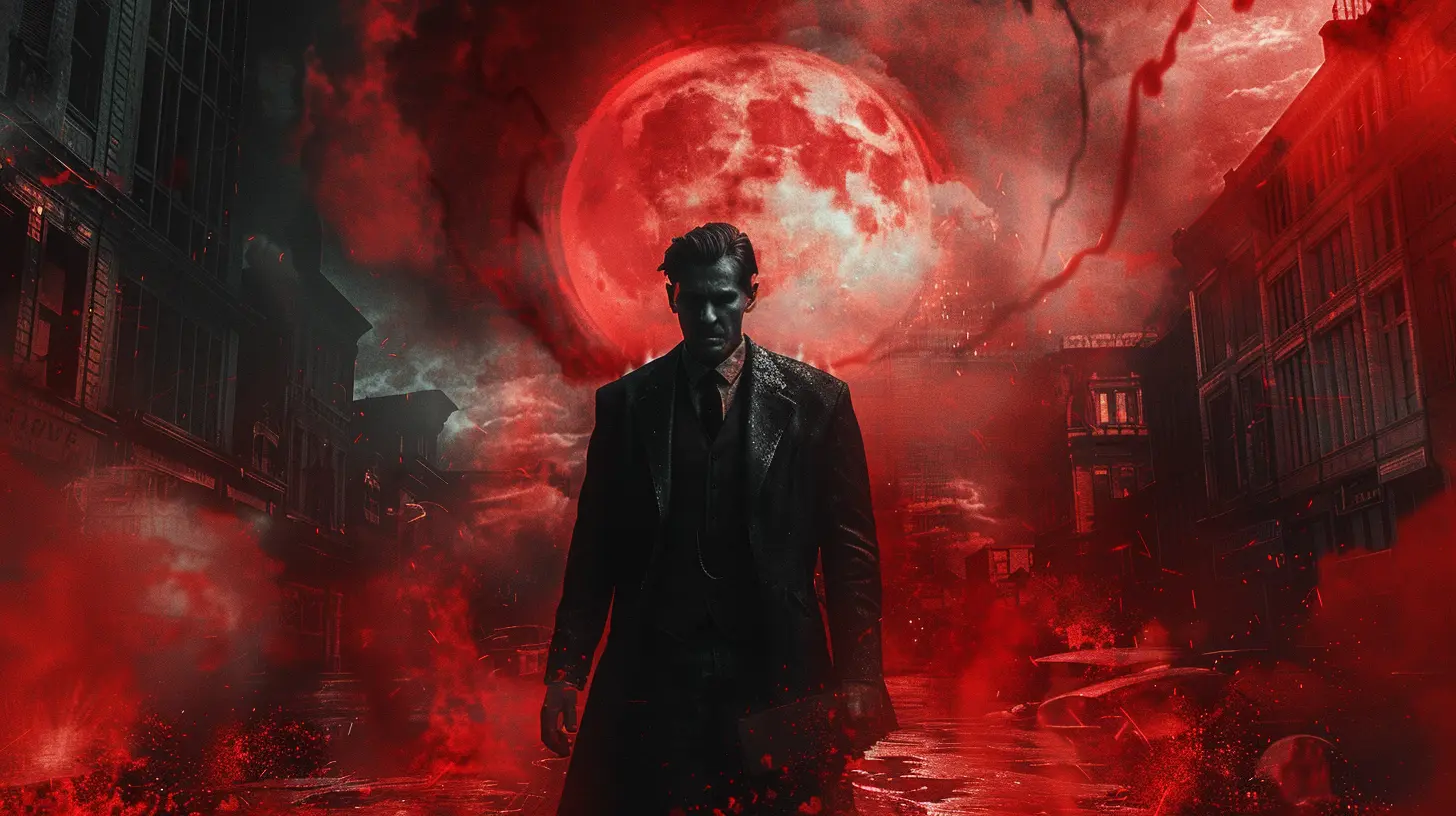
Who Was Andrew Ryan?
Andrew Ryan is the central antagonist in the original BioShock game released in 2007. He’s not your garden-variety villain. He’s a capitalist dreamer, a philosophical purist, and a man who believed that true freedom could only exist miles beneath the sea.Born Andrei Rianofski in Russia in the early 1900s, Ryan's early life was marked by political turmoil and revolution. He fled communist Russia for America, believing that hard work and individualism were the keys to true success. But over time, even America disappointed him. Government interference, moral constraints, and social obligations chipped away at his ideals, eventually convincing him that the only way to preserve his vision was to create a society of his own.
Welcome to Rapture: A Utopia Beneath the Waves
Imagine building an entire city underwater. Insane, right? But Ryan actually did it. Rapture was meant to be a haven for the best and brightest—the scientists, artists, and entrepreneurs of the world—all free from government, religion, and anyone who wanted to put a leash on innovation.Ryan summed it up perfectly in his famous quote:
_"Is a man not entitled to the sweat of his brow?"_
To him, Rapture was the answer to the world’s hypocrisy. But what started as a dream quickly turned into a dystopian nightmare.
The Fall Begins: Ideals vs. Reality
Here's the thing—utopias sound great on paper. But when you remove regulations, accountability, and empathy, chaos isn’t far behind.In Rapture, science had no leash. That led to the creation of ADAM, a gene-altering substance harvested from sea slugs, which gave people superhuman powers. Sounds great until everyone starts craving more and more of it, turning into violent addicts known as Splicers.
As things got worse, Ryan didn’t back down—he doubled down. He clamped down on freedom, turned against his own people, and used brutal force to keep control. Basically, the man who built Rapture for liberty ended up becoming the very tyrant he tried to escape in the outside world.
Andrew Ryan vs. Atlas: The Battle for Rapture's Soul
You can’t talk about Andrew Ryan without mentioning Atlas. Known later to be Frank Fontaine in disguise, Atlas was Ryan’s perfect foil. Where Ryan was idealistic and rigid, Atlas was pragmatic and charismatic. He rallied the poor and oppressed citizens of Rapture against the elite class, sparking a full-blown civil war.Ryan, obsessed with maintaining control, resorted to totalitarian tactics—security bots, surveillance, disappearances… You name it. The man who once championed free will was now a dictator doling out death to dissenters.
And the kicker? Fontaine, under the guise of Atlas, was manipulating everything from the shadows, playing Ryan like a puppet.
Would You Kindly…? The Ultimate Betrayal
There’s a moment in BioShock that still sends chills down every gamer's spine. You know the one I'm talking about—when you find out your character has been brainwashed all along, and the phrase “Would you kindly” was code to make you obey without question.Guess who exposes it? Andrew Ryan himself.
In one of gaming’s most powerful scenes, Ryan, knowing he's lost everything, deliberately commands you to kill him. Not because he wants to die, but to make a point: you were never free. Not in Rapture. Not anywhere.
He hands you a golf club. He says the words.
“Would you kindly… kill me.”
And you do.
It's not just death—it’s poetic, tragic, and the most damning critique of Ryan’s failed dream. He dies proving a point. His final stand isn’t a fight; it’s a lecture.
Ryan’s Core Flaw: Stubborn Idealism
You might be asking yourself, “Was Andrew Ryan evil?” It’s complicated.Ryan wasn’t motivated by greed or malice. He genuinely wanted to build a better society. But his flaw was his blind faith in his ideals. He refused to believe his vision could go wrong. Even when Rapture began to collapse, he insisted the problem was with the people—not the system.
That’s what makes him so tragic. In today’s world, we’ve seen leaders, companies, and even entire movements refuse to adapt, holding onto their principles even when the world around them is burning. Ryan is that person—the one who’d rather watch everything fall apart than admit he was wrong.
Legacy: What Andrew Ryan Taught Us
Andrew Ryan left a legacy that goes beyond the confines of BioShock. His character forces us to question:- What happens when freedom has no limits?
- Can a utopia exist without empathy and cooperation?
- Is free will truly possible under any form of control?
Ryan was a man who built paradise and destroyed it with the same hands. In doing so, he became a symbol of both the power and the peril of unyielding ideology.
Even in death, his voice echoes through Rapture, reminding us that vision without compassion leads to ruin.
The Psychological Profile of a Visionary Tyrant
Let’s zoom out for a second. Psychologically speaking, Ryan’s behavior reflects that of many real-world authoritarian leaders. He starts out with good intentions, but becomes so convinced that his way is the only way, he turns into the thing he hates.Ryan couldn’t tolerate failure. When the people of Rapture turned away from his ideals, he blamed them, not the system. His refusal to compromise, to show vulnerability, and to adapt marks the tipping point from visionary to villain.
He was also deeply paranoid. Constant surveillance, assassinations, and propaganda were staples of his rule. That’s the paradox—he built a city to avoid oppression, then ruled it with an iron fist.
BioShock’s Storytelling Masterclass
It’s impossible to talk about Ryan without giving credit to BioShock's storytelling. This isn't just a great character; it's a masterclass in narrative design.The environmental storytelling in Rapture—ruined homes, abandoned shops, blood-stained walls—tells you everything you need to know about the fall of a dream. And then there’s Ryan’s voice, always in your ear, reflecting on philosophy, humanity, and control.
The game doesn’t just tell you what went wrong—it lets you live it.
Real-World Comparisons: Fiction Meets Reality
Andrew Ryan shares eerie similarities with figures like Ayn Rand, whose philosophy of Objectivism heavily influenced his worldview. He’s also a mirror to many real-world tycoons who push for deregulation, only to cause the very chaos they claimed to solve.Rapture, in many ways, is a warning. It shows us what happens when innovation outruns ethics, and when dreams ignore the human cost.
Sound familiar?
Why We Still Talk About Andrew Ryan
BioShock came out over a decade ago, yet Andrew Ryan remains one of gaming's most talked-about villains. Why? Because he’s not a simple character. He’s not driven by jealousy, revenge, or chaos. He’s driven by belief.And that’s what makes him terrifying. A villain who knows he's right, who believes he's the hero of the story, is far more dangerous than someone just looking for power.
Ryan makes us reflect on our world—on politics, philosophy, and our own moral compass. He forces us to ask, “What am I willing to sacrifice for my beliefs? And is it worth it?”
Final Thoughts: The Man Who Built and Broke a Dream
Andrew Ryan wasn't just a villain—he was a vision wrapped in flesh. He gave us Rapture, a city so beautifully broken it feels almost real. His rise and fall weren’t just moments in a game—they were lessons on ambition, idealism, and the fine line between genius and madness.And perhaps the most haunting lesson of all? That sometimes, the greatest danger isn't the people we fear—but the dreams we refuse to question.
all images in this post were generated using AI tools
Category:
Lore And StorylinesAuthor:

Stephanie Abbott
Discussion
rate this article
2 comments
Erin Vance
Andrew Ryan is a complex character whose tragic fall encapsulates the consequences of unchecked ambition and ideological extremes. BioShock masterfully weaves his story, reminding players that even the noblest visions can lead to devastating outcomes. A poignant exploration of morality.
February 19, 2026 at 4:11 AM
Stephanie Abbott
Thank you! I'm glad you appreciated the exploration of Andrew Ryan's character and the themes of ambition and morality in BioShock.
Marissa Benson
A captivating analysis of a complex antagonist!
February 16, 2026 at 4:59 AM
Stephanie Abbott
Thank you! I'm glad you found the analysis engaging. Andrew Ryan's complexity really makes him a fascinating subject.