The Role of Terrain and Elevation in Outsmarting Your Enemies
22 December 2025
When it comes to competitive gaming or tactical combat sims, most people focus on flashy weapons, insane reflexes, or killer strategies. But there’s one aspect that often gets overlooked—and yet it’s been a deciding factor in battles, both real and virtual, for centuries. Yep, I’m talking about terrain and elevation. Whether you’re running through dense forests in a first-person shooter, tactically setting up in a real-time strategy game, or planning your next move in a battle royale, the lay of the land can make or break your chances of victory.
So, let’s break this down. Why is terrain so important? And how can something as simple as a hill or a patch of grass work in your favor? Buckle up, because we’re diving deep into how mastering terrain and elevation can turn you into a tactical mastermind.
The High Ground Advantage: Why It’s More Than Just a Meme
You’ve heard it before: “I have the high ground!” It’s become a meme thanks to Star Wars, but trust me, it’s no joke in actual gameplay. Having the high ground isn’t just about looking cool—it’s about raw tactical superiority.Line of Sight Matters
When you’re perched on high ground, you’ve got a bird’s-eye view of the battlefield. This means you can spot enemies before they spot you, giving you precious seconds to line up your shot or plan your next move. Think about it: in games like PUBG or Fortnite, would you rather be the guy stuck in a valley with enemies raining bullets down on you, or the sniper chilling on top of a hill? Yeah, I thought so.Gravity Is Your Friend
There’s also the factor of physics. Firing downward from a higher elevation gives your bullets—or projectiles—a more direct trajectory. Meanwhile, enemies firing upward have to deal with gravity pulling against their shots. In melee combat games, rushing downhill gives you momentum, which can make all the difference in timing and damage output.Defensive Benefits
It’s not just about offense. High ground is naturally harder to assault. People coming uphill are slower, more exposed, and way easier to pick off. Heck, even in historical battles, entire armies have been wiped out because they underestimated the strength of a well-defended hill.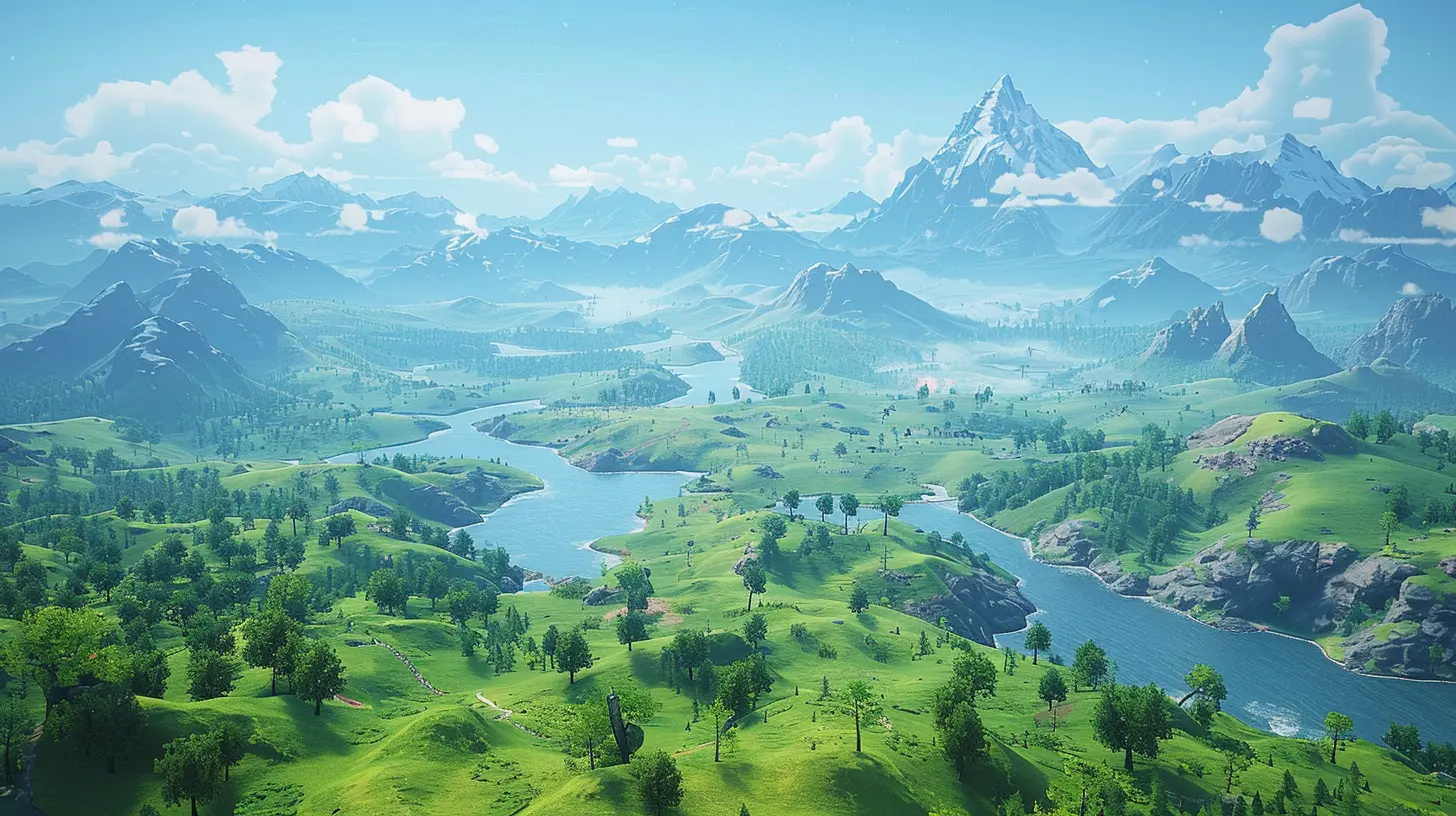
Terrain Isn’t Just Scenery: Learn to Use It Strategically
It’s easy to look at terrain as nothing more than background noise. I mean, how often do you really pay attention to whether you’re next to a rock or hiding behind some bushes? But trust me, every aspect of the environment you’re in matters.Cover and Concealment
Let’s get one thing straight: cover and concealment aren’t the same. Cover is something that can stop bullets or block an enemy’s attacks—like a tree, a wall, or a car. Concealment, on the other hand, just hides you. So, that bush you’re crouched in? It might keep you out of sight, but it won’t save you from a barrage of bullets.The trick is knowing when to use which. If you’re planning an ambush, concealment is your best friend. Hiding in tall grass in Apex Legends or crouching in a shadowy corner in Call of Duty can make you practically invisible. But if you’re under heavy fire, your priority should be finding solid cover to protect yourself.
Choke Points and Bottlenecks
Ever heard of a “choke point”? It’s a narrow area where movement is restricted, like a bridge, doorway, or canyon. These are goldmines if you’re trying to set up an ambush or slow down your enemies.Picture this: you’re playing a game like StarCraft or Age of Empires. The enemy army is advancing, but they have to cross a narrow bridge to get to you. Instead of meeting them head-on, you set up a defensive line on your side of the bridge. By the time they push through, their army is decimated. That’s the power of controlling choke points.
Understanding Flanking Routes
On the flip side, terrain can also reveal opportunities to outmaneuver your enemies. In any game with a map—be it League of Legends or Rainbow Six Siege—paying attention to flanking routes is key. If you notice the enemy is fixated on a central pathway, you can use side routes to sneak around and hit them where they least expect it. It’s like the gaming equivalent of pulling out the rug from under someone’s feet.
Verticality in Modern Gaming: The Elevation Meta
These days, modern games have taken elevation to a whole new level (pun intended). It’s no longer just about hills and mountains—developers are incorporating verticality into maps in creative ways.Parkour and Mobility
Games like Titanfall 2 and Apex Legends embrace vertical movement with parkour mechanics and grappling hooks. This isn’t just for show; it’s a tactical tool. If you can move faster and more efficiently than your enemies, you can dictate the flow of combat. Think of it like being a spider, weaving through a web while your enemies are stuck on the ground.Multi-Level Maps
Then there are games like Overwatch or Call of Duty, where maps have multiple layers—rooftops, underground tunnels, and everything in between. Understanding how to use these levels is critical. For example, if you’re playing a sniper, you’ll want to find the highest vantage point. But if you’re a close-combat specialist, you might benefit from sticking to tight, enclosed areas where you can ambush unsuspecting enemies.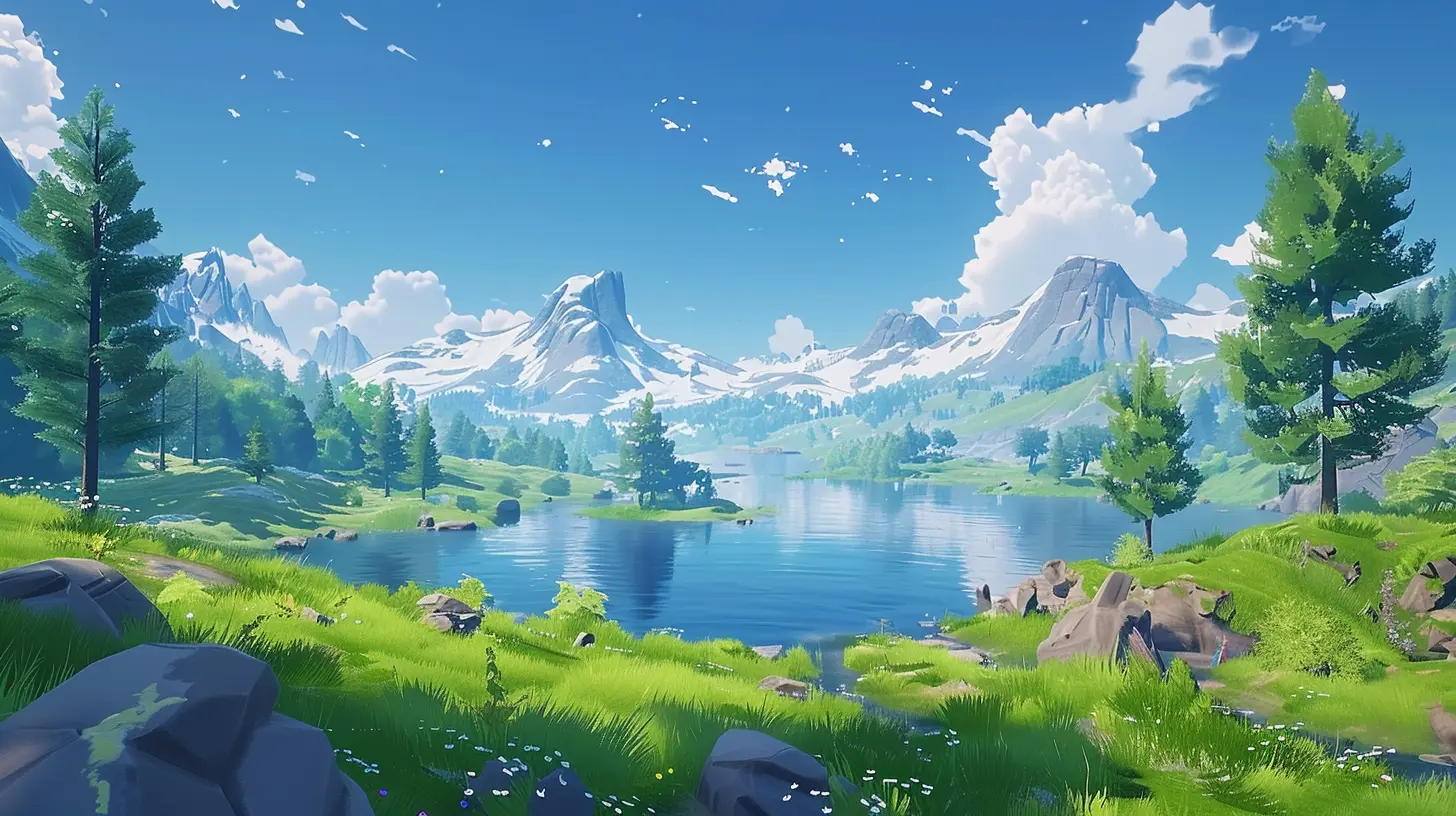
The Psychological Edge: Terrain and Elevation as Mind Games
It’s not just about physical advantages—terrain and elevation can mess with your opponent’s head, too. There’s something naturally unnerving about fighting an enemy you can’t see or one who has the upper hand in positioning.Intimidation and Bluffing
Holding a high vantage point or controlling a fortified area can make you seem way scarier than you actually are. Sometimes, enemies will hesitate to engage just because the odds look stacked against them—even if you’re low on ammo or health.Misdirection and Ambushes
Ever heard of “playing possum”? You can use terrain to fake weakness. For instance, retreating into a narrow canyon might make it look like you’re running scared, but in reality, you’re leading your enemies into a trap where your squad is waiting. It’s like baiting a mouse with cheese—except you’re the one with the mousetrap.How to Practice Terrain Awareness in Games
Alright, so you get the idea. Terrain and elevation are important. But how do you actually get better at using them in your games? Here’s some practical advice:1. Study the Map – Before you jump into a match, take a few minutes to study the layout of the map. Where are the high points? Where can you find cover? Are there any choke points or flanking routes?
2. Think Like a Predator – Instead of charging headfirst into combat, think of yourself as a hunter. Observe your surroundings, anticipate enemy movements, and position yourself where you’ll have the upper hand.
3. Use the Environment to Train – Play a few matches where you intentionally focus on using terrain to your advantage. For example, try to win a fight only by using high ground or setting up ambushes in tight spaces.
4. Watch the Pros – Whether it’s esports players or popular streamers, pay attention to how the pros use terrain in their games. You’ll pick up tricks and strategies that you might not have thought of on your own.
Closing Thoughts: Outsmart, Outplay, Outlast
At the end of the day, winning isn’t just about being the fastest shooter or the best swordsman. It’s about outthinking your opponents. And mastering terrain and elevation is one of the smartest ways to do that. Whether you’re perched on a high hill, lying in wait in a lush jungle, or funneling enemies into a narrow choke point, the environment is your secret weapon.Next time you’re in a game and you’re about to rush into a fight, pause for a second. Look around. Ask yourself, “How can I use the terrain to my advantage?” Trust me, taking the time to think tactically will make all the difference.
all images in this post were generated using AI tools
Category:
Battle RoyaleAuthor:

Stephanie Abbott
Discussion
rate this article
2 comments
Nicholas Simmons
High ground, low IQ for foes!
December 26, 2025 at 6:15 PM
Stephanie Abbott
Thank you for your comment! Terrain certainly plays a crucial role in strategy, and understanding it can make all the difference in overcoming challenges.
Nadia Davis
This article succinctly highlights the crucial impact terrain and elevation have in strategy games. Understanding these elements can indeed turn the tide in battle. I appreciate the practical examples provided; they serve as a great reminder to always leverage your environment for tactical advantage. Well done!
December 25, 2025 at 5:56 AM
Stephanie Abbott
Thank you for your thoughtful feedback! I'm glad you found the examples helpful in highlighting the importance of terrain and elevation in strategy games.